

>
Partner of the Year 2024 — Simplex Fire DetectionISO 9001 · 14001 · 45001 Certified
detection

Optical Beam Smoke Detection Systems

Cover large, tall volumes with a single detector — for warehouses, atriums and production halls where a ceiling device would never see the smoke in time.
Explore Applications
Beam Detection
Overview

What Is Optical Beam Detection?

Beam detection works across a space rather than at a point in it. A transmitter projects an infrared beam to a receiver or a reflector at the far end, and smoke crossing anywhere along that path reduces how much light arrives. The detector responds to that obscuration.

That matters in tall buildings because smoke does not reliably reach the roof. Rising smoke draws in cool air, loses buoyancy and spreads sideways at the height where its temperature matches the surrounding air — frequently well below a roof-mounted detector.

  • One device covers a wide volume A single beam supervises an area that would otherwise need a grid of point detectors.
  • Built for height Warehouses, atriums, production halls and sports facilities, where ceilings defeat conventional detection.
  • Mounted where you can reach it Devices sit on walls or columns, so testing does not need roof access or an aisle shutdown.
  • Compensates for dust Gradual contamination is tracked separately so build-up is reported as a fault, not read as smoke.
Operation

How Optical Beam Detection Works

01

Transmit

An infrared beam is projected across the protected volume.

02

Receive

A receiver or reflector at the far end returns the signal to the detector.

03

Measure obscuration

Smoke crossing the path reduces the light arriving, and the detector measures that drop.

04

Alarm and response

Sustained obscuration at the set threshold signals the fire alarm panel.

Benefits

Why Choose Optical Beam Detection?

Wide-area coverage

One beam supervises a volume that would need a grid of point detectors.

Built for height

Suited to warehouses, atriums, production halls and sports floors.

Testable from the floor

Devices mount at an accessible level, so routine testing needs no roof access.

Fewer devices to own

Less cabling, less testing and lower cost across the system's life.

Designed around the layout

Beam paths are cleared of racking, lighting and crane movement at design stage.

Dust tolerant

Slow contamination is compensated rather than treated as an alarm condition.

Applications

Applications Across Critical Environments

Beam detection earns its place wherever the ceiling is too high, or too awkward to reach, for conventional detection to be reliable.

Also used in cold stores, aircraft hangars, sports halls and transport terminals. Whether a beam, an aspirating system or a combination is right depends on the building, which is what the site assessment establishes.
Configuration

Inside an Optical Beam Detection System

  • Transmitter and receiver or a single end-to-end unit working against a reflector.
  • Reflector or prism assembly mounted on the opposing structure and aligned at commissioning.
  • Mounting and alignment hardware chosen for the structure and for the movement it will see.
  • Fire alarm panel interface with the obscuration thresholds configured for the space.
  • Fault and contamination monitoring so a blocked or misaligned beam reports rather than fails quietly.
  • Design, commissioning and maintenance including beam path survey and alignment at handover.
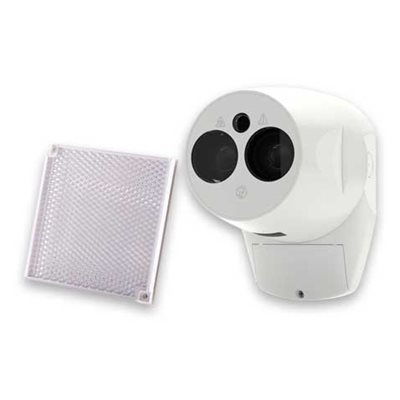
FFE Fireray optical beam smoke detector
An optical beam detector. One device supervises the volume between it and its reflector.
Products

Products We Supply

The beam detection range we are an authorised partner for.

Our services

End-to-End Beam Detection Solutions

  • Site assessment and risk review walking the actual space before anything is specified.
  • System selection and application engineering matching the technology to the environment and the risk.
  • Beam path survey and alignment so the coverage you pay for is the coverage you get.
  • Integration with existing fire alarm systems including the cause-and-effect for any linked response.
  • Installation, testing and commissioning with the installed system proven on handover.
  • Preventive maintenance and technical support under AMC, with a documented service record.
Compliance

System Integration and Compliance

Standards and approvals

Beam detection forms part of the building's automatic fire detection installation. It is interfaced to the fire alarm control panel, and to any linked response the project design calls for.

In India the installation sits within IS 2189 and Part 4 of the National Building Code (NBC 2016), and the completed system forms part of what your state fire service assesses for the fire NOC. EN 54-12 is the relevant European standard for optical beam smoke detectors.

We confirm product approvals against the certification held by the specific model proposed, and against your consultant's specification and local statutory requirements.

FAQ

Frequently Asked Questions

What facility and project teams usually ask about beam detection.

Still have a question?

Speak directly with one of our fire safety engineers.

Call +91 88795 33000
What is an optical beam smoke detector?
It projects an infrared beam across a space. Smoke crossing the path reduces the light reaching the receiver, and the detector responds to that obscuration.
How is it different from point detectors?
A point detector waits for smoke to reach the ceiling above it. A beam supervises the whole volume between its two ends, which is why it suits tall buildings where smoke never reaches the roof.
How large an area can one beam cover?
That depends on the device and the geometry of the building. Coverage is established at design stage from the span, the mounting height and the obstructions present.
Will racking or cranes interfere with it?
They can, which is why the beam path is surveyed and designed around racking, lighting and crane movement rather than fitted afterwards.
Does dust cause false alarms?
Gradual contamination is tracked separately from a sudden change, so slow build-up is reported as a fault rather than an alarm. Cleaning is part of the maintenance schedule.
Can it be installed in an existing building?
Usually yes. Devices mount on walls or columns at an accessible height, which is often easier to retrofit than a ceiling grid.
What do you need to quote a project?
Building dimensions and ceiling height, the layout including racking and obstructions, whether it is a new installation or an upgrade, and drawings if you have them.
Engineered to your hazard class

Protect Large Spaces with Early Smoke Detection

Talk to our team about a beam detection solution sized to your building, its height and its layout.

+91 88795 33000
Chat with an expert
CallWhatsApp