

Responds in seconds
It reads the flame directly rather than waiting for smoke to arrive.
See the fire itself, in seconds — for fuel handling, process areas and outdoor zones where a flammable fire gives almost no smoke to detect.
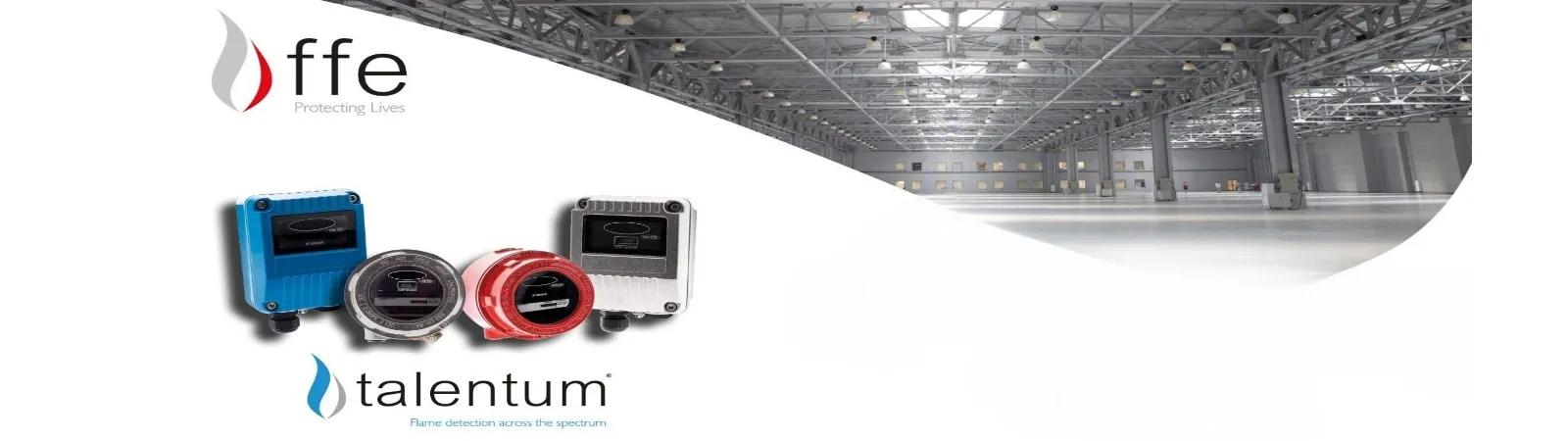
Smoke detection assumes a fire smoulders first. Many do. A flammable liquid or gas fire does not: it ignites, reaches full size in seconds and produces little smoke while releasing an enormous amount of radiant heat.
A flame detector looks for the fire itself. Flames emit a characteristic pattern of ultraviolet and infrared radiation that flickers at a frequency quite unlike steady heat or light. The detector watches its field of view for that signature and responds without waiting for anything to travel.
The detector monitors a cone of view covering the hazard.
It measures UV and IR radiation and the flicker frequency of the source.
Several wavelengths are compared so welding, sunlight and hot surfaces are rejected.
A confirmed flame signals the panel and can trigger deluge, shutdown or interlocks.
It reads the flame directly rather than waiting for smoke to arrive.
Designed for flammable liquid and gas fires that reach full size almost immediately.
Multi-wavelength discrimination against welding, hot work and sunlight.
Effective in open and high-airflow areas where smoke detection cannot.
Designed as a field of view from the hazard, not as a ceiling grid.
Interfaces to deluge release, emergency shutdown and plant interlocks.
Flame detection is specified where a release could ignite and the response has to be automatic and immediate.
Loading, decanting and tank areas where a release could ignite.
Industry detailReactors, solvent handling and areas with flammable inventory.
Industry detailLubricating oil and fuel systems around rotating plant.
Industry detailSpray booths and drying ovens with flammable vapour.
Industry detailWarehouses holding solvents, aerosols or fuel products.
Industry detailLarge open structures with fuel present and high airflow.
Industry detailAlso used on offshore and onshore installations, LPG facilities and waste handling. The detector type and its placement follow the fuels present and the lines of sight available, which the site assessment establishes.
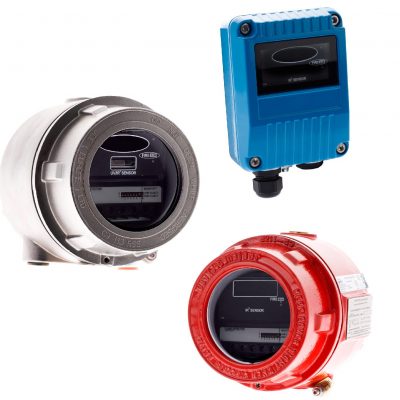
The flame detection range we are an authorised partner for.
Flame detection in classified areas is applied alongside the hazardous-area rules of the IS/IEC 60079 series as well as the fire detection requirements for the building.
In India the installation sits within NBC 2016 Part 4, and the completed system forms part of what your state fire service assesses for the fire NOC. EN 54-10 is the relevant European standard for flame detectors.
We confirm product approvals and area classification suitability against the certification held by the specific model proposed, and against your consultant's specification.
What facility and project teams usually ask about flame detection.
Speak directly with one of our fire safety engineers.
Call +91 88795 33000Talk to our team about a flame detection solution matched to your fuels, your area classification and your shutdown philosophy.