
>
Partner of the Year 2024 — Simplex Fire DetectionISO 9001 · 14001 · 45001 Certified
suppression

Electrical Panel Fire Protection

Deal with the fire inside the cabinet, in the first seconds — tube-based suppression that needs no power, no wiring and no detector to fail.
Explore Applications
Electrical Panel Protection
Overview

What Is Panel Fire Protection?

A large share of industrial fires begin inside electrical enclosures, for unremarkable reasons: a loose termination heating over months, a contactor welding itself, insulation degrading, or dust bridging a gap that was adequate when the panel was new.

What makes them serious is where they start. Inside a closed metal cabinet a fire is invisible, the smoke is contained, and nothing in the room has any reason to react until the enclosure has been breached. Tube-based suppression deals with it at source: a pressurised polymer tube is routed past the components most likely to fail, and bursts at the point of highest heat.

  • Protection inside the enclosure The detection tube runs past the terminations and components that actually fail.
  • It acts at the hot spot The tube bursts where the heat is and releases agent directly there.
  • No power and no wiring Nothing to lose in exactly the fault condition being protected against.
  • Retrofits to what you have Fits existing panels, racks and cabinets without rebuilding the board.
Operation

How Panel Protection Works

01

Route the tube

Pressurised detection tubing is installed through the enclosure, past the risk.

02

Sense by heat

Rising temperature at any point weakens the tube wall at that point.

03

Burst and release

The tube ruptures at the hot spot and the pressure drop opens the cylinder.

04

Suppress at source

Agent discharges inside the cabinet before the fire can leave it.

Benefits

Why Choose Panel Fire Protection?

Protects where fires start

Room detection cannot see inside a closed cabinet until it is far too late.

Acts in seconds

Suppression happens inside the enclosure before cable trays are involved.

No dependency on supply

No power, wiring or control panel — nothing to fail with the circuit it protects.

Retrofits easily

Fits existing boards and racks without a rebuild or a long outage.

Equipment stays serviceable

Clean agent options leave the surviving board usable.

Low cost against the risk

Small relative to the panel, and very small against the production behind it.

Applications

Applications Across Critical Environments

This is usually the cheapest meaningful risk reduction on an industrial site, because it protects the one place nothing else is watching.

Also used for CNC cabinets, generator control panels and renewable energy inverters. Whether a direct or indirect arrangement suits depends on the enclosure, which the site assessment establishes.

Configuration

Inside a Panel Protection System

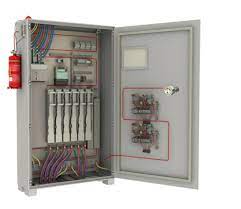
  • Detection tubing pressurised polymer tube routed past the components most likely to fail.
  • Agent cylinder sized to the enclosure volume and mounted inside or alongside it.
  • Direct or indirect arrangement the tube delivers the agent itself, or triggers a separate nozzle.
  • Pressure gauge and indication so the system's readiness is visible without testing it.
  • Optional alarm interface to the fire panel or BMS where the project design calls for it.
  • Design, commissioning and maintenance including enclosure survey and pressure checks under AMC.
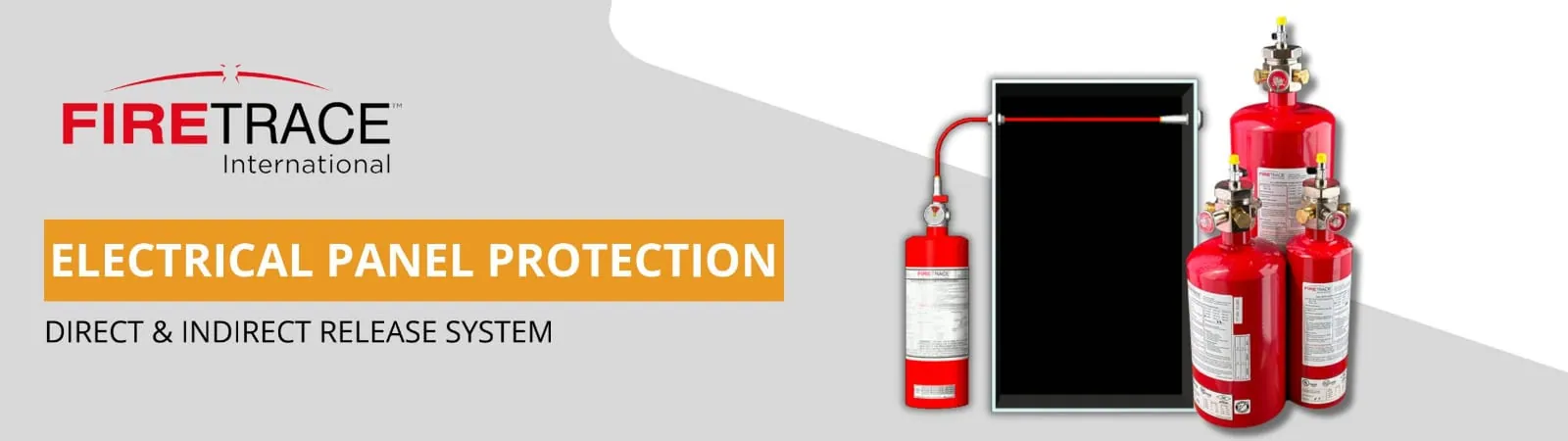
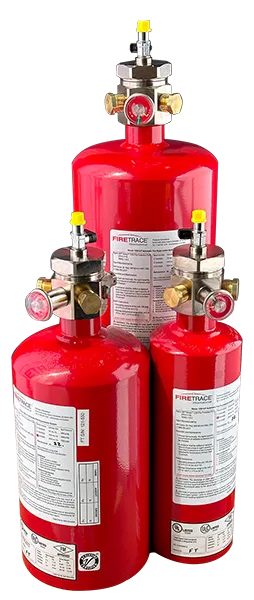
Firetrace tube-based panel fire suppression
Tube-based suppression inside an enclosure. The tube is both the detector and the delivery route.
Our services

End-to-End Panel Protection Solutions

  • Site assessment and risk review walking the actual space before anything is specified.
  • System selection and application engineering matching the technology to the environment and the risk.
  • Enclosure survey and tube routing design so the coverage you pay for is the coverage you get.
  • Integration with existing fire alarm systems including the cause-and-effect for any linked response.
  • Installation, testing and commissioning with the installed system proven on handover.
  • Preventive maintenance and technical support under AMC, with a documented service record.
Compliance

System Integration and Compliance

Standards and approvals

Panel and enclosure suppression is applied under Part 4 of the National Building Code (NBC 2016) as part of the site's fire protection, with the electrical installation and enclosure requirements following the relevant IS and IEC practice for the switchgear concerned.

Insurers frequently set specific conditions for switchgear and control room protection, and the installed system forms part of what is assessed.

We confirm agent and component approvals against the certification held by the specific system proposed, and against your consultant's specification.

FAQ

Frequently Asked Questions

What facility and maintenance teams usually ask about panel protection.

Still have a question?

Speak directly with one of our fire safety engineers.

Call +91 88795 33000
How does it detect a fire inside the panel?
The detection tube is the sensor. It is pressurised, and at the point of highest heat the tube wall weakens and bursts — which is both the detection and the trigger.
Does it need a power supply?
No. There is no power, no wiring and no control panel, which matters because the fault being protected against is an electrical one.
Will it damage the equipment?
Clean agent options leave no residue and do not conduct, so the surviving board remains serviceable.
Can it be fitted to an existing panel?
Yes. The tube and a small cylinder fit inside or alongside existing boards and racks, usually without a long outage.
Direct or indirect — what is the difference?
In a direct system the tube itself delivers the agent at the burst point. In an indirect system the pressure drop opens a valve and discharges through a separate nozzle, which suits larger enclosures.
How do I know it is still charged?
A pressure gauge gives a visible indication of readiness, and pressure checks are part of the maintenance schedule.
What do you need to quote a project?
The number and size of enclosures, what is inside them, whether they are energised during work, and photographs or drawings if you have them.
Engineered to your hazard class

Protect Your Switchgear Before Fire Leaves the Cabinet

Talk to our team about panel protection sized to your enclosures and your production risk.
+91 88795 33000
Chat with an expert
CallWhatsApp