

Warns before exposure
It reports a rising concentration while the answer is still ventilation.
Know a concentration is rising while it is still a ventilation problem — fixed toxic and combustible gas detection for plants, labs, utilities and hazardous areas.
Gas hazards are difficult because human senses are unreliable against them. Carbon monoxide has no smell at all. Hydrogen sulphide has a strong one at low concentration and then deadens the sense of smell at exactly the levels that are dangerous.
A fixed installation puts sensors where each gas will actually collect and a controller that monitors, logs and acts on them. Placement is not a formality: hydrogen and methane rise, chlorine and many solvent vapours pool low, and the room's ventilation moves all of them in ways specific to that building. A sensor in the wrong place is not reduced protection — it is none.
Fixed detectors monitor the atmosphere continuously at the points that matter.
The controller logs concentration so a rising level is visible early.
Low thresholds start ventilation; higher ones raise alarms.
At the action level the system drives interlocks, isolation or plant shutdown.
It reports a rising concentration while the answer is still ventilation.
Logged levels show a developing problem instead of only a threshold breach.
Technology is selected for the hazard rather than one unit used throughout.
Sensors sit where that gas will actually collect in that room.
Interlocks to ventilation, isolation and shutdown rather than a horn alone.
Bump testing, calibration and sensor replacement scheduled under AMC.
Fixed gas detection is usually the specific control a safety audit or statutory inspection asks you to demonstrate.
Solvent handling, reactors and areas with a flammable inventory.
Industry detailStorage, decanting and process areas with hydrocarbon risk.
Industry detailSolvent stores, fume handling and specialty gas supply.
Industry detailBattery rooms, gas-fired plant and confined service spaces.
Industry detailAmmonia and refrigerant plant rooms.
Industry detailCarbon monoxide from running engines in enclosed spaces.
Industry detailAlso used in water treatment, waste handling, car parks and confined service spaces. Which gases to monitor, and where, comes out of the risk review rather than a standard list.
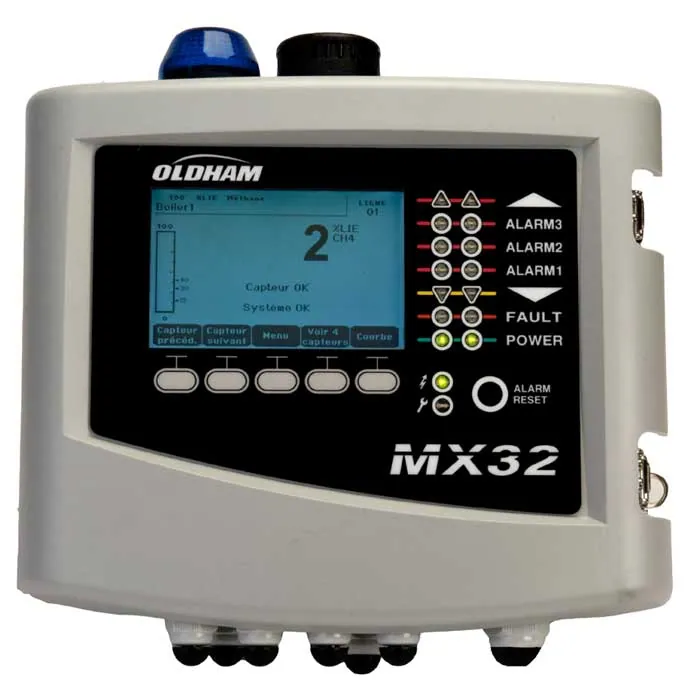
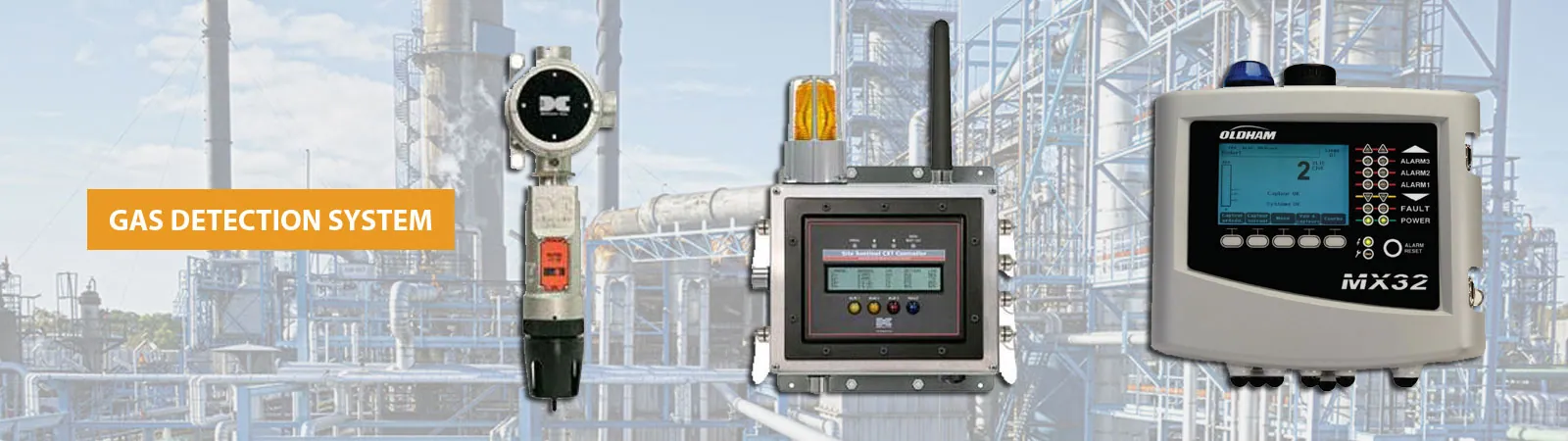
The gas detection range we are an authorised partner for.
Fixed gas detection in classified areas is designed around the hazardous-area framework of the IS/IEC 60079 series together with the occupational exposure limits applicable to your process.
Where it forms part of the building's fire protection it also sits within NBC 2016 Part 4. It is commonly the specific control a safety audit or statutory inspection asks you to evidence.
We confirm detector approvals and area classification suitability against the certification held by the specific model proposed, and against your consultant's specification.
What facility and safety teams usually ask about gas detection.
Speak directly with one of our fire safety engineers.
Call +91 88795 33000Talk to our team about a gas detection solution matched to your gases, your area classification and your shutdown philosophy.